What is ceramic IR window tint, and how is it different from cheaper tint?
Short answer
Ceramic IR window tint is a thin film applied to the inside of your car's windows. It uses non-metallic ceramic particles to block 99.9% of UV and reject up to 98% of infrared energy, the part of sunlight you feel as heat. Cheaper dyed film mostly just darkens the glass, and over time it can turn purple and bubble.
Quick facts
| Film APC installs | Ceramic IR window tint from Ceramic Pro |
|---|---|
| UV blocked | 99.9% |
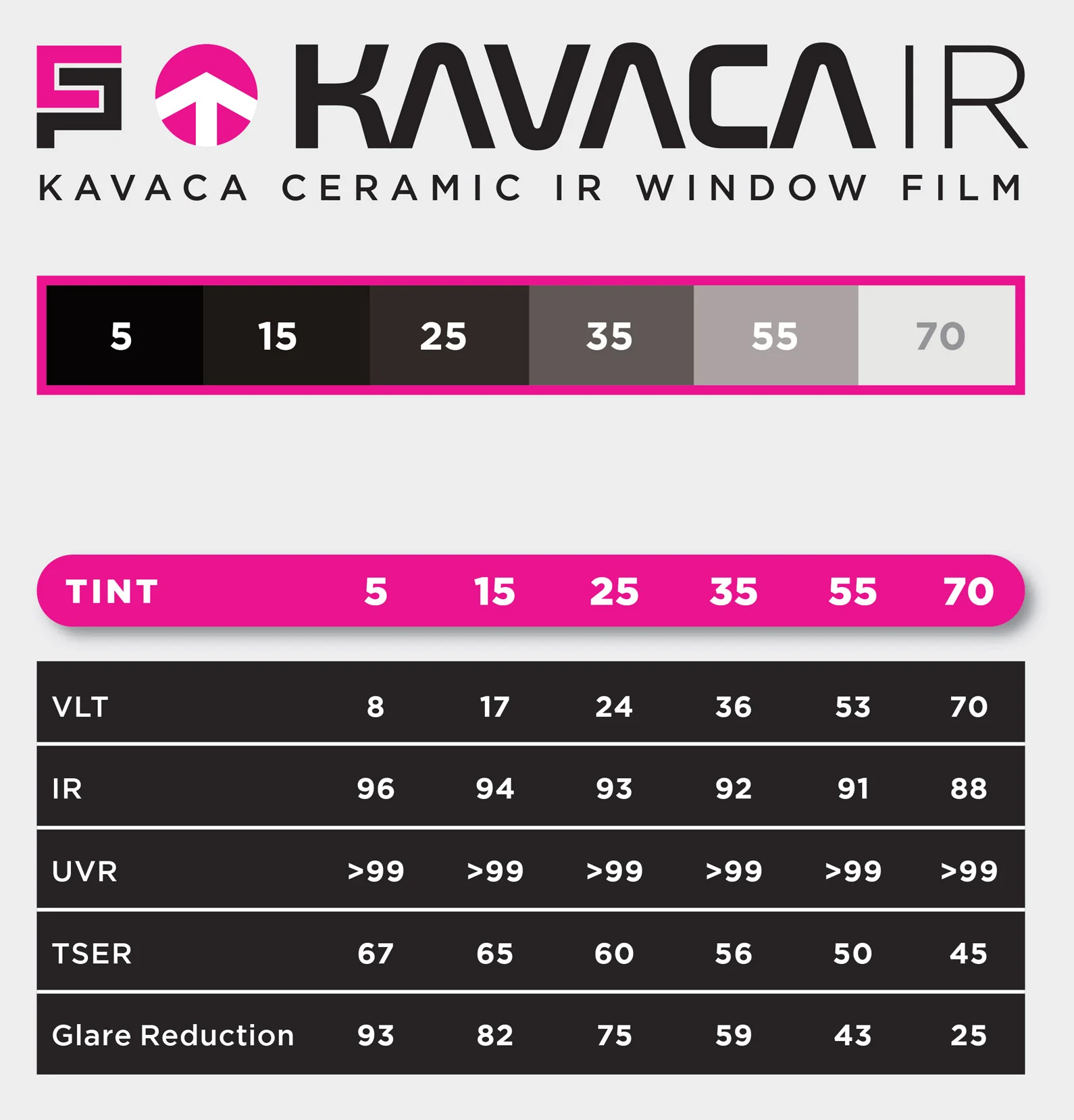
| Infrared rejected | Up to 98% on the shades APC stocks |
| Construction | Non-metallic ceramic |
| Signal interference | None with phone, GPS, Bluetooth, satellite radio or toll transponders |
What does Ceramic IR window tint actually do?
It does five jobs at once: it rejects heat and infrared energy, blocks UV, cuts glare, changes the look of the car, and adds privacy. On a sunny day you feel the difference on your arms and face, and the cabin doesn't bake as much while the car is parked.
What kinds of window tint are there?
There are four general types. Dyed film darkens the glass with dye, which is why it's the cheapest. Metalized film uses tiny metal particles to reflect heat, but metal can interfere with electronic signals. Carbon film uses carbon particles for a matte look and some heat rejection. Ceramic film uses non-metallic ceramic particles to reject heat without blocking signals.
Old, cheap dyed film is the tint you see on older cars that has turned purple and started to bubble. See Can you remove old, purple or bubbling tint?
Does a darker tint block more heat?
Not with Ceramic IR. Every shade APC stocks has the same protection level. The percentage only changes how dark the window looks, so a light shade still gives you the full heat and UV benefit. See Which tint percentage should I choose?
What can't window tint do?
Tint is a thin film, so it can be scratched by seat belts, rings, keys, ice scrapers or cargo. Washington law sets the limit for front side windows at 24% visible light transmission. See How dark can you legally tint your windows in Washington?
How APC Auto Spa does it
APC Auto Spa installs Ceramic IR window tint from Ceramic Pro. APC stocks four shades: 15%, 25%, 35% and 70%, all with the same heat and UV protection.
Film is plotter-cut from patterns for your exact vehicle and installed on the inside of the glass. Compare options at APC's window tint page.
Frequently asked questions
- Is Ceramic IR tint the same as regular tint?
- No. Regular dyed tint mostly darkens the glass. Ceramic IR uses non-metallic ceramic particles to reject infrared heat and block UV.
- Will ceramic tint mess with my phone or GPS?
- No. It's non-metallic, so it doesn't interfere with phone, GPS, Bluetooth, satellite radio or toll-transponder signals. See Does tint interfere with cameras, sensors or phone signal?
- Why does old tint turn purple?
- Old, cheap dyed film breaks down over time. The dye fades unevenly, which turns the film purple, and the film can start to bubble.
Reviewed by Heather Humphrey, co-owner of APC Auto Spa · Last updated October 2026
Heather leads customer education and training at APC's Tukwila and Monroe shops.